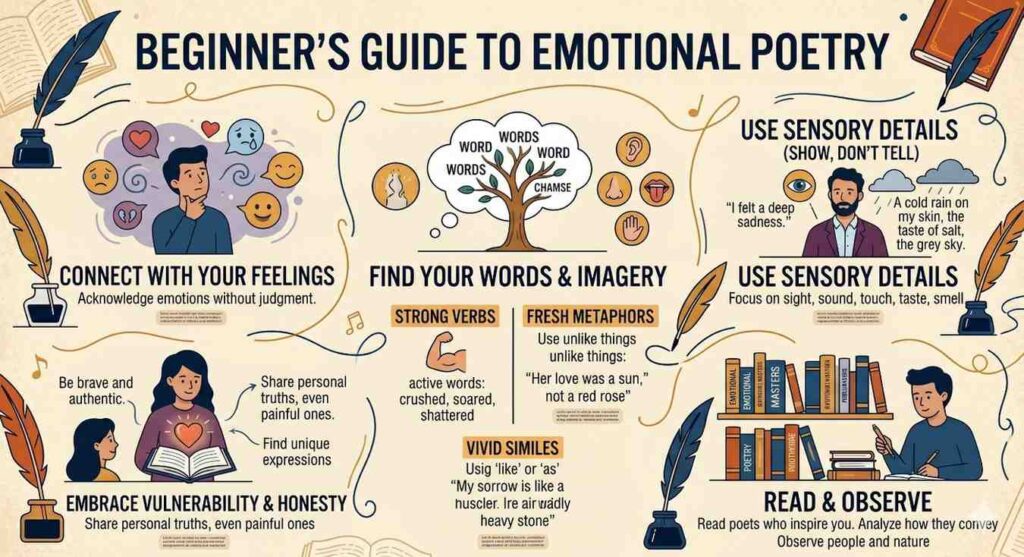
Poetry has always been one of the most powerful ways to express emotions that are difficult to explain in normal conversations. Whether it is love, heartbreak, loneliness, happiness, fear, or healing, emotional poetry allows people to turn their deepest feelings into meaningful words. Many beginners think poetry must follow strict rules or use complicated language, but emotional poetry is more about honesty than perfection.
If you are new to writing emotional poetry, this guide will help you understand how to express feelings naturally and connect with readers through your words.
What Is Emotional Poetry?
Emotional poetry focuses on feelings, experiences, and personal thoughts. It is written to make readers feel something deeply. Unlike technical writing, emotional poetry speaks directly to the heart.
The strongest emotional poems often come from real experiences. A simple memory, conversation, heartbreak, or moment of silence can inspire a powerful poem.
For example:
“I smiled in front of everyone,
but my silence knew the truth.”
Simple lines like these feel personal and relatable because they reflect genuine emotions.
Start With a Real Feeling
The first step in writing emotional poetry is understanding what you truly feel. Instead of trying to impress readers with difficult vocabulary, focus on your emotions honestly.
Ask yourself:
- What emotion am I feeling right now?
- What memory keeps returning to my mind?
- What pain or happiness do I want to express?
- What do I wish someone understood about me?
Your answers can become the foundation of your poem.
Emotional poetry becomes meaningful when readers can see themselves in your words.
Write Freely Without Judging Yourself
Many beginners stop writing because they feel their poetry is not “good enough.” The truth is, emotional poetry does not need to sound perfect. It only needs to feel real.
Do not worry too much about rhyming or structure in the beginning. Start by writing your thoughts naturally, just like you are talking to yourself.
For example:
- “I miss the old version of us.”
- “Some nights feel heavier than others.”
- “I learned how silence can hurt.”
Even simple thoughts can become beautiful poems when written honestly.
The most important thing is to allow your emotions to flow without fear.
Use Simple and Relatable Language
One of the biggest mistakes beginners make is trying to use overly complicated words. Emotional poetry works best when readers can easily connect with it.
Instead of writing:
“My soul remains trapped in endless sorrow.”
You can write:
“I still carry sadness I never talk about.”
The second line feels more natural and relatable.
Simple language creates stronger emotional impact because readers understand it immediately.
Show Emotions Through Imagery
Good emotional poetry helps readers imagine feelings visually. Rather than directly saying “I was heartbroken,” describe the emotion through scenes, memories, or objects.
For example:
“Your empty chair still waits beside the window.”
This line quietly expresses loss without directly mentioning heartbreak.
You can use:
- Rain
- Night skies
- Empty rooms
- Old messages
- Fading photographs
- Silence
- Music
- Seasons
These details help emotions feel deeper and more vivid.
Read Emotional Poetry for Inspiration
Reading poetry regularly can help you understand rhythm, emotions, and writing styles. Every poet expresses feelings differently, and exploring different styles can inspire your own voice.
You may notice that some poems are short and direct, while others are descriptive and story-like. Some use rhyming patterns, while others are completely free-flowing.
Reading poetry teaches you how emotions can be transformed into memorable lines.
However, inspiration should never become imitation. Your unique experiences and emotions are what make your poetry special.
Practice Writing Daily
Like any skill, poetry improves with practice. Try writing a few lines every day, even if they are incomplete thoughts.
You can write about:
- Memories
- Love
- Anxiety
- Loneliness
- Healing
- Dreams
- Friendships
- Fear of losing someone
Over time, you will naturally discover your writing style and emotional depth.
Do not delete your old poems. They show your growth as a writer.
Edit Without Losing Emotion
After writing your poem, read it slowly and remove unnecessary words. Good emotional poetry is usually clear and focused.
Ask yourself:
- Does this line feel honest?
- Can readers emotionally connect to it?
- Is the poem simple and meaningful?
- Does every line add emotion?
Editing helps improve clarity while keeping the original feeling alive.
Share Your Poetry Confidently
Sharing poetry can feel scary at first because emotions are personal. But emotional poetry often connects deeply with people who have experienced similar feelings.
Posting your poems on blogs, Instagram, or poetry communities can help you find readers who truly relate to your words.
Remember, not everyone will understand your poetry, and that is completely normal. Poetry is personal, and every reader connects differently.
Final Thoughts
Emotional poetry is not about writing perfect lines. It is about expressing feelings honestly and creating words that touch hearts. The beauty of poetry lies in its ability to make people feel understood, even in silence.
If you want to start writing emotional poetry, begin with your truth. Write about your feelings, memories, fears, and hopes without overthinking perfection. The more honestly you write, the more meaningful your poetry will become.
Your emotions already hold the story — poetry simply gives them a voice.