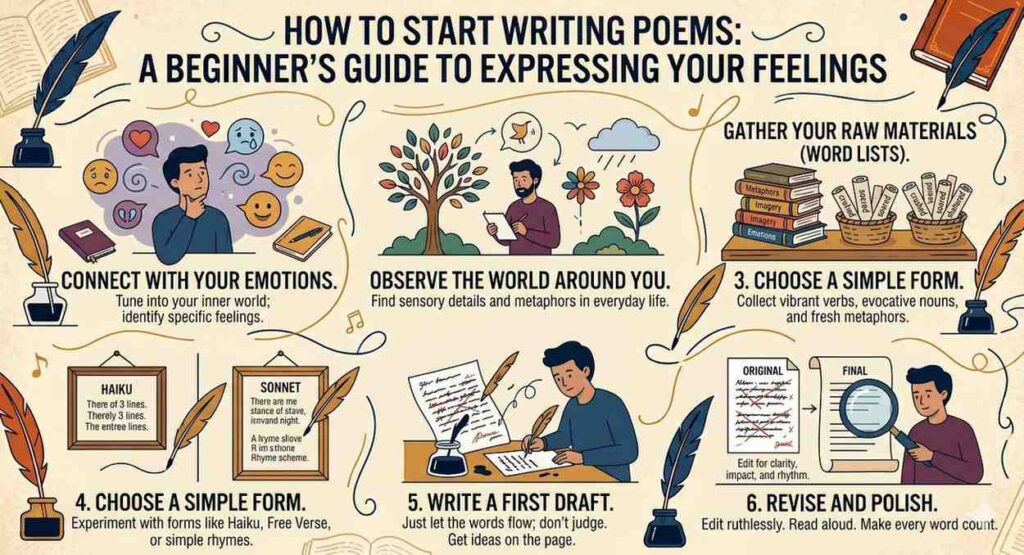
Poetry is one of the most beautiful ways to express emotions, thoughts, and experiences. You do not need to be a professional writer or use difficult words to write a meaningful poem. The best poems often come from genuine feelings and simple emotions that people can relate to. If you have ever wanted to write poetry but did not know where to begin, this guide will help you take your first step.
Start With Your Emotions
Every poem begins with a feeling. It could be happiness, sadness, love, loneliness, heartbreak, hope, or even confusion. Instead of trying to create something perfect, focus on what you truly feel inside.
Ask yourself simple questions:
- What am I feeling right now?
- Is there a memory I cannot forget?
- What emotion do I want readers to feel?
Poetry becomes powerful when it feels real. Readers connect more with honest emotions than complicated language.
For example, instead of writing:
“The melancholy of existence surrounds me.”
You can simply write:
“Some nights feel heavier than others.”
Simple lines often leave a stronger impact.
Read Different Types of Poems
Before writing poetry, spend some time reading poems from different writers and styles. This helps you understand rhythm, emotions, and creativity. You will notice that every poet has a unique way of expressing thoughts.
Some poems rhyme, while others are free-flowing without any specific structure. Some are short and deep, while others tell long emotional stories. Reading poetry regularly can inspire your own writing style naturally.
Do not copy another writer’s voice. Instead, learn from their emotions and techniques while creating your own expression.
Write Without Fear
Many beginners stop writing because they think their poems are “not good enough.” The truth is, every poet starts somewhere. Your first poem does not need to be perfect.
The most important step is to start writing.
Take a notebook or open your phone notes and write whatever comes to your mind. Do not overthink grammar, rhyming, or structure in the beginning. Let your emotions flow naturally.
You can even start with simple lines like:
- “I miss the person I used to be.”
- “Rain reminds me of old memories.”
- “Some people stay in our hearts forever.”
A single thought can become a complete poem.
Use Imagery and Feelings
Good poetry helps readers imagine emotions visually. Instead of directly saying “I was sad,” describe the feeling creatively.
For example:
“My room stayed silent while memories screamed inside my head.”
This creates emotion and imagery together.
Think about:
- Sounds
- Weather
- Colors
- Memories
- Places
- Small details
These details make poems feel alive and relatable.
Keep Your Poems Simple
Many people believe poetry must use difficult vocabulary, but simplicity is often more powerful. Readers connect deeply with words they understand easily.
Short emotional lines usually leave a lasting impression because they feel personal and honest.
For example:
“You stopped talking,
but I still reply to your memories.”
Simple poetry is also more shareable on social media platforms like Instagram and Pinterest.
Practice Every Day
Writing poetry is like learning any other skill. The more you practice, the better you become. Try writing a few lines daily, even if you do not complete an entire poem.
You can write about:
- Your day
- A memory
- Someone you miss
- Nature
- Dreams
- Fear
- Healing
- Love
Over time, you will discover your own writing style and emotional depth.
Do not delete old poems. When you look back later, you will see how much your writing has improved.
Do Not Be Afraid to Edit
First drafts are rarely perfect. After writing a poem, read it again slowly. Remove unnecessary words and improve lines that feel unclear.
Ask yourself:
- Does this poem feel natural?
- Can readers connect emotionally?
- Are the lines too complicated?
- Does every line add meaning?
Editing helps your poem become stronger without losing its emotion.
Share Your Poetry
Once you feel confident, start sharing your poems online or with close friends. Posting poetry on blogs, Instagram, or poetry communities can help you connect with readers who relate to your emotions.
Not everyone will understand your writing, and that is okay. Poetry is personal. The goal is not perfection — it is expression.
Final Thoughts
Poetry is not about following strict rules. It is about turning emotions into words that others can feel. Every person has a story, emotion, or memory worth expressing. The best way to start writing poems is simply to begin.
Write honestly, write fearlessly, and let your emotions guide your words. Over time, your poetry will naturally become deeper, stronger, and more meaningful.