Expressing feelings through words is one of the most powerful ways to connect with yourself and others. Sometimes emotions become too heavy to keep inside, yet difficult to explain aloud. Writing gives those emotions a voice. Whether it is happiness, heartbreak, love, loneliness, anger, or hope, putting feelings into words can help you understand yourself better and make others relate to your experiences.
Many people struggle to express emotions because they fear being judged or believe they are not good writers. The truth is, expressing feelings through words is not about using perfect grammar or difficult vocabulary. It is about honesty, emotion, and clarity. Even the simplest sentences can touch someone deeply when they come from genuine feelings.
Understand What You Are Feeling
Before you can express emotions through words, you need to understand what you are feeling inside. Many emotions are mixed together, making them difficult to describe immediately.
Take a moment to ask yourself:
- Why am I feeling this way?
- What caused this emotion?
- What memory keeps coming back?
- What do I wish someone understood about me?
The more clearly you understand your emotions, the easier it becomes to express them naturally.
For example, instead of simply saying “I feel sad,” think deeper:
- Are you feeling lonely?
- Hurt?
- Ignored?
- Disappointed?
- Heartbroken?
Specific emotions create stronger and more meaningful writing.
Write Honestly Without Overthinking
One of the biggest mistakes people make is trying to sound impressive instead of sounding real. Emotional writing becomes powerful when it feels natural and honest.
Do not worry about making every sentence perfect. Start writing your thoughts exactly as they come to your mind.
For example:
- “I miss how things used to be.”
- “Some conversations still replay in my head.”
- “I smile, but my heart feels tired.”
Simple words often carry the deepest emotions because readers can easily connect with them.
Writing honestly also helps release emotions that may have been hidden for a long time.
Use Personal Experiences
Real emotions create authentic writing. Think about moments in your life that left an emotional impact on you. It could be:
- Losing someone
- Falling in love
- Feeling alone
- Achieving something important
- Missing old memories
- Experiencing heartbreak
- Healing after pain
Personal experiences make your words feel genuine and relatable.
Even small moments can inspire emotional writing. A song, a rainy evening, an unread message, or an empty room can hold strong feelings.
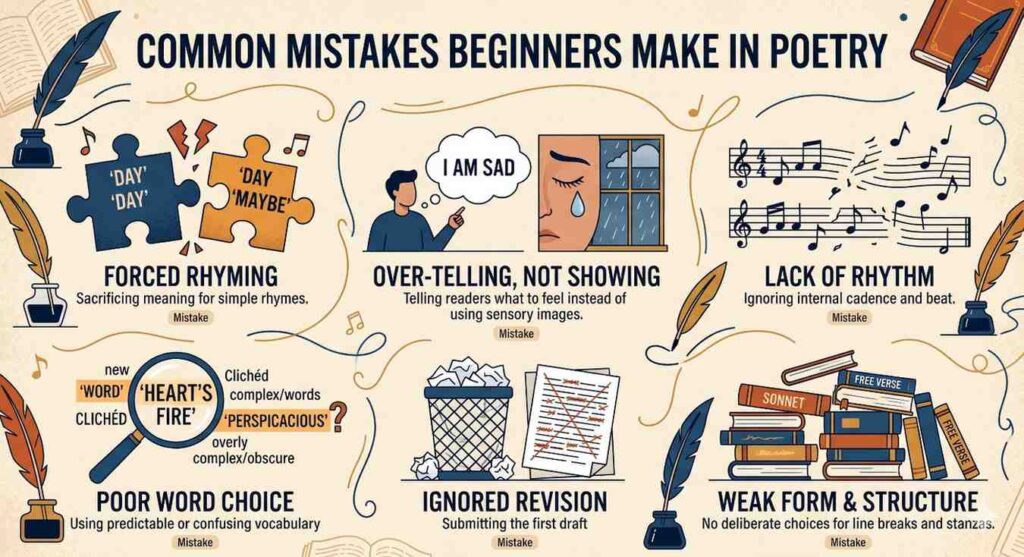
Show Feelings Instead of Only Naming Them
Good emotional writing helps readers feel emotions rather than simply reading them. Instead of directly saying “I was heartbroken,” describe the emotion through scenes or imagery.
For example:
“I kept checking my phone even when I knew no message would come.”
This creates a stronger emotional connection because readers can imagine the feeling themselves.
You can use:
- Weather
- Silence
- Colors
- Memories
- Places
- Objects
- Sounds
These details bring emotions to life.
Keep Your Language Simple
You do not need complicated words to express deep feelings. In fact, simple language often feels more emotional and relatable.
Instead of writing:
“My soul remains trapped in unbearable sorrow.”
You can write:
“Some pain stays longer than people do.”
The second sentence feels natural and emotional without sounding forced.
Readers connect more with words that feel real and personal.
Read Emotional Writing and Poetry
Reading emotional blogs, poems, captions, or journals can help you learn how others express feelings creatively. It also teaches you different writing styles and emotional tones.
You may notice that emotional writing often focuses on:
- Vulnerability
- Memories
- Honest thoughts
- Simple imagery
- Relatable emotions
Reading regularly can improve your ability to express yourself more clearly.
However, avoid copying someone else’s style completely. Your own emotions and experiences are what make your writing unique.
Practice Writing Every Day
Expressing feelings through words becomes easier with practice. Try writing daily, even if it is only a few lines.
You can keep:
- A journal
- Personal notes
- Poetry drafts
- Emotional captions
- Thought diaries
Some days you may write a full page, while other days only one sentence. Both are valuable.
The goal is not perfection — it is expression.
Do Not Fear Vulnerability
Many people hide emotions because they fear appearing weak. But emotional honesty is actually a strength. Some of the most powerful writing comes from vulnerability.
When you write openly about emotions, readers often feel understood because they have experienced similar feelings themselves.
You never know whose heart your words may touch.
Final Thoughts
Expressing feelings through words is a journey of honesty, self-discovery, and emotional connection. You do not need to be a professional writer to express yourself beautifully. All you need is the courage to be real.
Start with your emotions, write honestly, and allow your thoughts to flow naturally. Over time, you will discover that words can heal, comfort, and connect people in ways silence never can.
Sometimes the feelings we cannot speak become the words we were always meant to write.