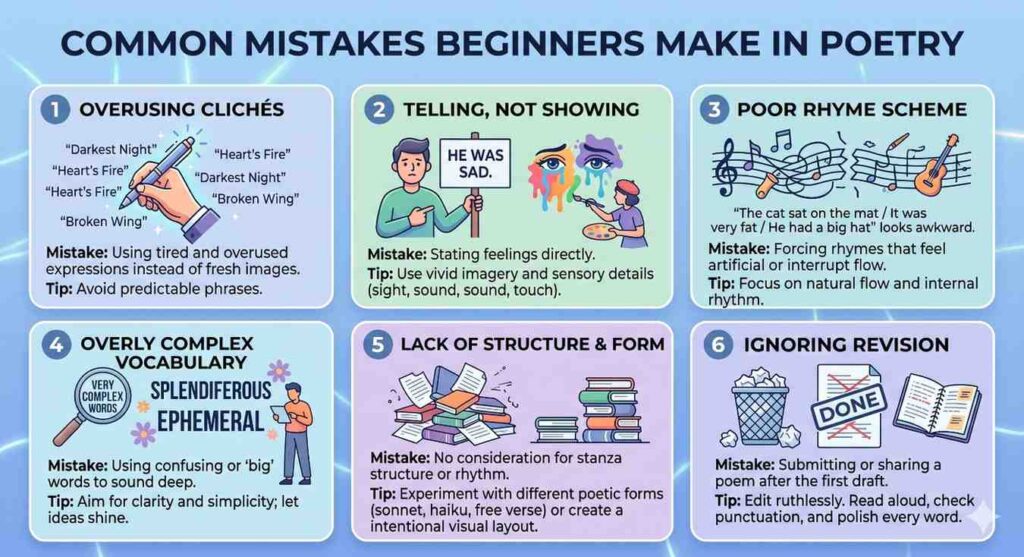
Poetry is one of the most beautiful ways to express emotions, thoughts, and imagination. Many people start writing poetry to express feelings they cannot explain in normal conversations. However, beginners often make certain mistakes that stop their poems from feeling natural, emotional, or impactful.
The good news is that every poet makes mistakes while learning. Writing poetry is a creative journey, and improvement comes with practice, observation, and honest expression. Understanding common beginner mistakes can help you grow faster and develop your own writing style with confidence.
Trying Too Hard to Sound Deep
One of the most common mistakes beginners make is forcing their poetry to sound overly intellectual or complicated. Many people believe deep poetry must contain difficult vocabulary and complex sentences.
In reality, simple and honest words often create stronger emotional impact.
For example, instead of writing:
“My existential despair consumes my fragmented soul.”
You can simply write:
“Some nights feel heavier than others.”
The second line feels more natural and emotionally relatable.
Poetry becomes powerful when readers can emotionally connect with it, not when they struggle to understand it.
Using Too Many Complicated Words
Beginners often think difficult words make poetry more impressive. However, overusing heavy vocabulary can make poems feel unnatural and emotionally distant.
Simple language creates clearer emotional connection.
Readers usually remember poems that feel real and relatable. Emotional honesty matters more than advanced vocabulary.
For example:
“I still wait for people who already left.”
This line is simple, but emotionally strong.
Good poetry does not need complicated words to touch hearts.
Focusing Only on Rhyming
Many beginners believe every poem must rhyme perfectly. While rhyming can sound beautiful, forcing rhymes often weakens emotional quality.
Sometimes writers choose words only because they rhyme, even when those words do not fit the emotion properly.
Poetry is not just about rhyme — it is about feeling.
Free verse poetry, which does not follow strict rhyming patterns, is also deeply meaningful and popular today.
Instead of focusing only on rhyme, focus on:
- Emotion
- Flow
- Imagery
- Honesty
- Connection
A poem without rhyming can still feel powerful.
Copying Other Writers Too Much
Reading poetry is important for learning, but many beginners accidentally imitate other writers completely instead of developing their own voice.
It is natural to feel inspired by famous poets like Rumi or Gulzar, but your personal experiences and emotions are what make your poetry unique.
Your writing does not need to sound like someone else’s.
The best poetry comes from:
- Your memories
- Your feelings
- Your observations
- Your personal thoughts
Authenticity creates originality.
Explaining Emotions Instead of Showing Them
Another common mistake is directly explaining emotions without creating imagery or feeling.
For example:
“I was very sad and lonely.”
This tells the emotion directly but does not create emotional depth.
Instead, try showing the feeling:
“The room stayed silent long after everyone left.”
This creates imagery and allows readers to feel the emotion themselves.
Good poetry often uses:
- Nature
- Silence
- Weather
- Memories
- Objects
- Small details
to express emotions creatively.
Overthinking Every Line
Many beginners stop themselves from writing freely because they overanalyze every sentence. They keep editing immediately instead of allowing emotions to flow naturally.
Poetry needs emotional freedom during the first draft.
Do not worry about perfection while writing. Let your thoughts come naturally first. Editing can happen later.
Sometimes the most emotional lines are written spontaneously.
Writing Without Genuine Emotion
Poetry written only to sound impressive often feels emotionally empty. Readers connect more deeply with poems that come from real feelings.
You do not need dramatic experiences to write meaningful poetry. Even small emotions and everyday moments can inspire beautiful lines.
Honest emotions create stronger writing than forced sadness or artificial depth.
For example:
“I miss conversations that used to feel like home.”
This line feels genuine because it reflects a relatable human emotion.
Ignoring Imagery and Details
Poetry becomes stronger when readers can visualize emotions. Beginners sometimes write very general lines without sensory details or imagery.
Compare these:
“I felt broken.”
and:
“The rain kept falling while I stared at unread messages.”
The second line creates atmosphere and emotional imagery.
Details help readers emotionally enter the poem.
Being Afraid of Vulnerability
Many beginners hide their real emotions because they fear judgment. But vulnerability is one of the strongest parts of poetry.
Readers connect with honesty.
Writing openly about:
- Loneliness
- Love
- Anxiety
- Heartbreak
- Healing
- Fear
often creates the deepest emotional impact.
You do not need to pretend to be someone else while writing poetry.
Expecting Perfection Too Quickly
Poetry is a skill that develops over time. Many beginners become discouraged when their early poems do not sound perfect.
Every great poet started as a beginner.
Improvement happens through:
- Practice
- Reading
- Observation
- Emotional honesty
- Consistency
Do not compare your first poems to experienced writers. Focus on expressing yourself and growing naturally.